
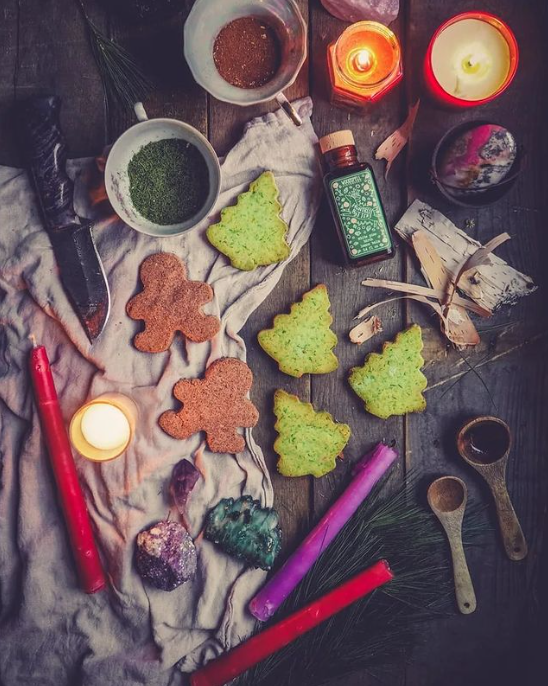
Foraged Pine & Birch Shortbread Cookies
There are few plants I wait to harvest until winter. White pine is one of those plants. I have a kindred relationship with this tree of peace. When you think of a pine tree, you may think of a rigid prickly tree. But white pine is not that at all, she is soft and billowy, a complete contradiction. Before you harvest your pine, take time to see which one calls to you. More than likely, you have many species of pine growing in your area. There may be one in particular that you will benefit from most.
Birch is another unique winter medicine. It is a symbol throughout many cultures as a protector of the woods and its people. Its slender white silhouette floats hauntingly in an otherwise dark forest. The bark I used for these cookies actually came from a tree that fell over naturally in the fall. We cut it up into segments that were a few feet long and stored them in our warm dry crawl space. Once winter came I then brought the segments up one by one to harvest the bark.
If you’re new to foraging, I go over a couple defining characteristics to look for before you harvest below, though I highly recommend finding a local guide book or plant person to assist you in the beginning.
Harvesting Pine
Identify a pine from other evergreens by looking at its needle formation. Pine needles come in “packets” of 2 to 8 needles whereas other evergreens have the needles growing directly on the branch
Pine needles are a traditional winter food full of vitamin C and other nutrients, meaning not only do they make these cookies a bit more nutritious, but they’re also delightfully nourishing in tea as well
First look for recently fallen branches to harvest before harvesting from a live tree
You only need a couple of pine boughs to produce enough material for these cookies
Cut the needles in half before adding to a coffee grinder to macerate them more easily
You can use any species of pine for these cookies, though be sure it is a TRUE pine. Some lookalikes such as yew are poisonous.
Harvesting Birch
Birch trees can be similar in appearance to aspen, the giveaway though is that all birches have bark that peels off in sheets
Any type of birch can be used for these cookies and medicine, though they’re flavor will vary from species to species. This recipe uses paper birch or Betula papyrifera
As with any tree, never harvest bark from the trunk of a live tree. Only harvest from the branches or from a tree that has recently fallen
Birch bark can be a bit trickier than most trees to harvest. You’ll have to peel back the papery outer bark first to reveal the thicker inner bark below. The inner bark doesn’t come off in sheets like most trees. The easiest way I’ve found is rather to use a sharp knife at an angle to shave it off instead. Big chunks will come off sometimes, but the shaving method is the most effective
You’ll notice birch has a mild wintergreen scent and flavor to it which is much like the sap it produces in the spring. Both its bark and sap are wonderful cleansing tonics, perfect to keep the body in check in the long winter months
Pine Shortbread Cookies (Paleo)
Ingredients:
2 1/4 cups almond flour
1/4 cup arrowroot powder
1/4 tsp sea salt
1/4 cup freshly ground pine needles
1 TB orange zest
1/4 cup maple syrup
1 tsp Huntress Bitters *optional*
1/3 cup ghee (or organic grass fed butter)
Directions:
Preheat oven to 350°F
Mix flour, arrowroot powder, and sea salt in a standing mixer
Grind pine needles in a coffee grinder or food processor
Add in ground pine needles, orange zest, maple syrup, and Huntress Bitters to mixer and combine
Add ghee or butter in intervals until you have a gooey ball (you may have to knead by hand if it isn't forming on its own)
Put the dough between two pieces of parchment paper and use a rolling pin to flatten to a 1/2 inch thickness
Use cookie cutters to cut out your shapes and bake for 14-16 minutes
Birch Shortbread Cookies (Paleo)
Ingredients:
2 1/4 cups almond flour
1/4 cup arrowroot powder
1/4 tsp sea salt
3/4 cup dry ground inner birch bark
1 tsp vanilla extract
1 tsp Huntress Bitters *optional*
1/4 cup maple syrup or birch syrup
1/3 cup ghee or organic grass fed butter
Directions:
Follow the same directions as the pine shortbread cookies above, except replace the pine needles and orange zest with the birch bark and vanilla extract

Wherever you go, the land remembers you
Wherever you go, the land remembers you.
The Appalachian mountains of Turtle Island were once part of the same mountain range as the Scottish Highlands and the Caledonian Mountains of Norway and Britain. There were rivers and reptiles that meandered from Brazil to Namibia and Nigeria. Antarctica, India and Australia once shared the same sunrises and sunsets. For nearly one hundred million years all land was connected, forming from sediment sent up from the Earth’s mantle, through the ocean floor, and up to the surface where water met air. It was as if the Earth itself longed for life.
Yet here in our modern lives with millions of years separating the Earth’s union, it is easy to feel out of place. Maybe your ancestors are from elsewhere. Maybe your ancestor’s land has been stolen. Maybe there are too many hundreds of years of violence and tragedy to know what to feel. There is no place on earth that has not seen pain. Please note, this does NOT negate the ongoing oppression of native people. In fact we cannot connect to the land without acknowledging the violence that continues to happen, our part in the perpetuation and working towards making reparations.
The land has a different concept of time though. Millions of years of connection do not fade silently into the night. No matter where you are from or where you ended up, the land recognizes your feet upon the soil from one continent to the next. It does not care if you think you are good, or if you think yourself bad. It simply is.
This does not erase the actions of man, but it allows us to become a part of something. Because if we are a part of something, then we grow to love that thing, and if we love something we feel responsibility towards it, a need to protect it at all costs. And if we feel a need to protect the thing we love, then we open the door to repairing what is broken and moving forward in a new, more accountable way. Put simply, people cannot truly know how to do better for the Earth and its people unless they feel they are a part of the thing they are repairing. Empathy and compassion cannot authentically be cultivated from a distance.
I remember driving eastward for hours and hours on my way to my new life in Colorado (for a few years at least) and seeing the dry western plains and the mountains rising from them for the first time. You know that feeling you get when you go somewhere new and you have an instant sense of home? Like you had been there before somehow? This was not that feeling. It was so alien to me, nothing like my home of forests and lakes. And yet as I got to know the flora and fauna of the land and walked reverently to mountain tops, my feet remembered. It was new but it was also the same.

wandering the Eastern plains of Colorado
The night before I left Michigan I specifically remember worrying that there wouldn’t be crickets in Colorado to sing outside my window at night. Of all things to be worried about, this was important for some reason. But even on those first nights in my new apartment, thousands of miles from where I began, I opened the windows and heard that they were still there. It was a reminder that no matter where I go, I am home. So long as I know who I am and know whose land on which I live, I am home.
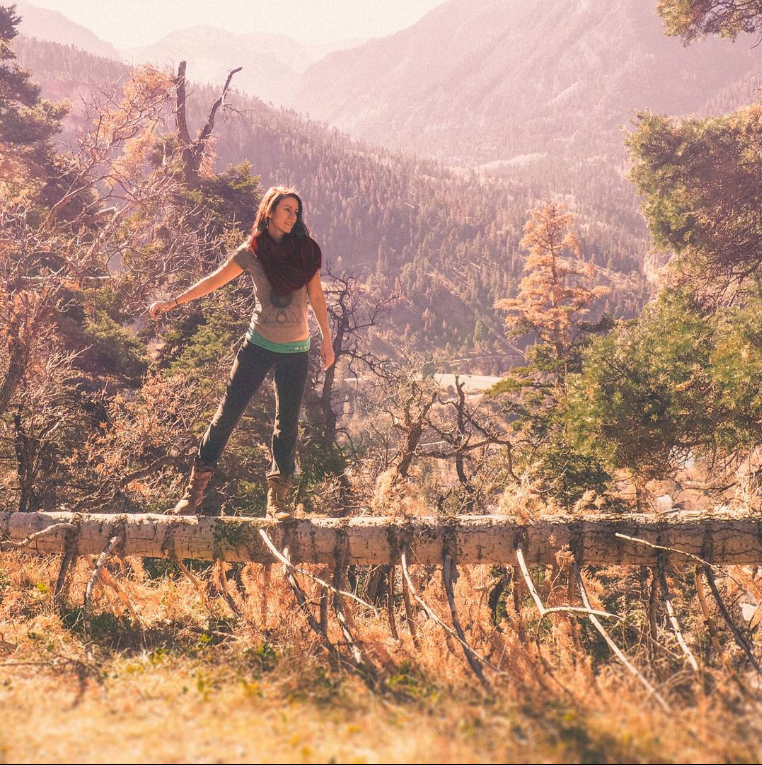
Loving on the mountains surrounding Durango
Once you experience the deep sense of belonging, a new world unfolds in front of you. The question is no longer where do I belong? Where is home for me? Rather, it becomes how can I heal the space, the community, that I am in? How can I make it more beautiful, more vibrant, more me?
Wendell Berry once wrote “There are no unsacred places; there are only sacred places and desecrated places.” Our task is no longer this endless journey of searching for a place that feels like home. Instead, our task is to steward, create, listen and celebrate. Whether you stay where you are or move elsewhere, home is not a place or a person, it is what YOU do with the space you are in.
With each step you take on the soft earth, know that it reverberates deep into the bones of the earth where it all began. I hope you know that you are exactly where you are meant to be at this moment in time, and even if that changes in the years to come, the land remembers you.

Sleeping under Arapaho Pass

Decolonization and Reparation for Anishinaabe Aki
Michigan home and the only sacred ground I’ve ever known. And yet, I know the only reason I am here is because of the violence committed upon the land and its people. As a descendant of Polish settlers, it is my responsibility to understand and support the voices of the indigenous people that still tend the Great Lakes region.
A wise woman once said “karma is generational”, and so here we are as karma comes back around, figuring out how to show up for the gaping wounds all across Turtle Island. I’m not sure it is a debt that can ever be paid, but the very least any of us can do is to educate ourselves on the people of this land and support them monetarily if we are in a position to do so. I created this list of resources for those that live in the Great Lakes region in particular to learn more about the Anishinaabe people who have dwelled here for thousands of years.
If you are not familiar with the Anishinaabe, this is the collective name for the three main groups of peoples that inhabit the Michigan (Anishinaabe Aki): mainly the Ojibwe, Odawa, Potawatomi in this area, but also the Algonquin, Saulteaux, Nipissing, and Mississauga.
History of the Ottawa and Chippewa Indians of Michigan : Perhaps the most important place to start. This publication was written by Andrew Blackbird, a prominent member of the Ottawa tribe, in 1887. He writes about his experience navigating the waters of colonization in the state of Michigan, as well as sharing his own tribal stories and notes on his indigenous language. This is an important piece because most histories of indigenous people are written by white men. This perspective from an indigenous person who lived during this time is a rarity and should be cherished.
MackinawOde : This word means “heart of the turtle” and is also the name of a Great Lakes organization of indigenous people who are leading the charge in environmental and indigenous rights in Michigan. They are huge factors in the fight against the Line 5 pipeline that runs under the Great Lakes, posing an unprecedented threat to the land and people that live here. You can volunteer and/or donate funds to support their work.
Mnomen (Wild Rice) - The Food That Grows on Water : Learn about one of the Anishinaabe’s most sacred crops in this film. Pottawatomi citizens share the importance and restoration efforts of this crop that grows upon the water throughout the Great Lakes.
Native Justice Coalition : An Anishinaabe, Two-Spirit, and sober led grassroots organization based in Anishinaabe Aki (Michigan). “We are a five year old organization and growing exponentially. We emphasize healing and sobriety in our leadership as a true form of decolonization. Our social and racial justice work is led by and for our people and communities.” You have the opportunity to volunteer or donate funds to this social justice group.
Anishinaabe Agricultural Institute : This group combats industrial agriculture by restoring agro-biodiversity, through local food systems, hemp, and traditional heritage crops. They offer many events, programs and educational resources on their mission to bring back indigenous agricultural practices to preserve their culture and also the land.
Plants Have So Much to Give Us, All We Have to Do Is Ask: Anishinaabe Botanical Teachings : Written by Mary Siisip Geniusz, an indigenous herbalist and wise woman of the Great Lakes region. Geniusz shares traditional stories of the plants that grow within this bioregion so that we may have a better understanding and respect for the healing resources around us. She writes about from her years as an oshkaabewis, a traditionally trained apprentice, and as friend to the late Keewaydinoquay, an Anishinaabe medicine woman from the Leelanau Peninsula in Michigan.
Keewaydinoquay: Stories from My Youth : Keewaydinoquay (mentioned in the previous resource) was also an oshkaabewis, a native healer, of the Anishinaabe people. This book details her life story as an indigenous person growing up in the region. In fact, her stories pick up just around where Andrew Blackbird’s (see first resource) stories leave off. While many of the stories she shares are passed down through generations, her own personal tales take place in the early 1900’s. She weaves her native folkways into stories along with her formal education as a university professor.
Cedar Songs : Also written by Keewaydinoquay, Cedar Songs provides more stories and insight into the life of a young indigenous girl in the early 1900’s and how she used her experiences to heal.

The Garden and the Moon: A Lunar Planting Guide
Many years ago when farmers had a closer relationship with the land they cultivated, there were reciprocal rules they lived by; a code of sorts. Lone trees in fields are never to be cut down (especially if it was a hawthorn tree), even if they happened to be in the way of harvesting. Always plant row crops from North to South instead of East to West. Never start new farming projects on Fridays. And of course, grow to the rhythms of the moon.
There was a level of respect and understanding our ancestors understood about the land that would seem outlandish and foolish to farmers of modern times. Yet as we look around at how the philosophies of modern farmers have stripped and pillaged the land, leaving poisoned soil, contaminated water sources, chemical ridden crops, and far fewer pollinators, shouldn’t we re-think what is foolish? Agriculture is the third largest source of pollution in the world. An industry that is meant to feed and nourish people is instead making them and the land sick.
So perhaps we should take a step back. Perhaps we should take a closer look at how and why ancient farmers lived by these more esoteric rules, even if it meant more work for them. All cultures had their own rituals and traditions when it came to growing food. Yet one thing that is woven amongst them all stands out. Working with the moon to plant, grow, harvest, weed and more was an essential part of farming practices around the world. In fact, this was the first documented use of astrology ever. Farmers were as closely tied to the cosmos as they were to the ground in which they planted.

summer in the Woodspell gardens
Times have changed drastically, and it has been less than a century since large mechanize farming equipment took over replaced thousands of years of hand-in-soil gardening. With this mechanical shift we saw the old ways die out quickly. The traditions and beliefs our ancestors held for generations slipped away into the relentless churning of the combine tines. Just around the time that this shift to big agriculture took place there was a head gardener and WW1 veteran running a large English estate. He still practiced the tradition of gardening by the moon and on his death bed he told his apprentice to carry on the tradition. He said "it is important” without much further explanation. Of all of the things he could be considering at this time, gardening by the moon stood out.
After hearing about this quiet man who had seen much violence and yet tended the garden under moonlight I became intrigued myself. I studied, experimented, and witnessed the shifting of the garden and myself as I changed my daily tasks to align with the movements of the moon. My days became more organized, seedlings transplanted strong and hardy, harvests were potent and abundant, the plants became more resilient. As the climate changes, I saw how something like this could be important to implement when the crops need all of the help they can get. So I created the LUNICA Planner to help myself and others attune to these rhythms amid the daily chaos of modern life. I too feel that it is important.
To understand why this was so important to them, and why it should be to us as well, we need to explore some of the philosophies on why moon gardening actually works. This is of course, a highly debated field of study. Many scientists (like modern farmers) would scoff at the idea that the moon influences crops. But there are reasons both scientific and beyond that point to reasons that we shouldn’t dismiss it so quickly.
How the Moon Influences Crops
The first thing that comes to mind when we think of the moon’s influence is of course the tides. However, the power of the moon is not just confined to the oceans. There is also a phenomenon called “crustal tides”. That’s right, the earth’s crust moves just like the ocean, albeit at a much smaller scale. These earth tides are shown to cycle in conjunction with the lunar phases, displaying a direct link to the moon and the land.
While the actual displacement of these tides is only about 2 feet worldwide per cycle, this can have a noticeable effect on groundwater levels. Scientists studied 115 aquifers and found that the water level did indeed rise and lower with the rhythm of these crustal tides. The fluctuations of water level varied from 3cm to 10cm.
This may seem like an irrelevant shift in terms of growing crops, but let’s step out of the idea that “more is more”. This mentality has gotten us into the mess we’re in now. Instead, to understand the influence of the moon, let’s consider flower essences. These vibrational remedies are considered to be more potent the further they are diluted. After the initial essence is made, it is then diluted twice more. Then for usage, only a few drops of that dilution are utilized. The result is a remedy that reaches below the physical self and into the emotional self. They reach down to levels that physical remedies cannot.
The effect of the gentle tides of the earth can be considered similar to how flower essences work. It is believed that as the tide rises, bioactivity or energy in the soil also rises. The different levels of activity in the soil are beneficial for different tasks.
At the same time, as we consider how water in the soil is affected, we can also think about how the gravitational or energetic pull of the moon affects crops. As the moon waxes, energy aboveground increases. As it wanes, energy belowground increases, a perfect cyclical mirror in the garden. The shifting of this pull is also ideal for different tasks at different phases, which we’ll discuss more later.
The issue is that science will never prove this relationship between moon and earth valid because this relationship doesn’t abide by modern scientific measurements. Scientists will forever call moon gardening pseudoscience while also encouraging farmers to use the newest herbicide or pesticide. While there are some wonderful studies out there that show how the moon and earth “may” affect each other, it is up to the conscious farmer or gardener to close the gap. It is up to them to experiment and see for themselves how their crops germinate at higher rates, how their harvests are more abundant and plants less susceptible to disease and pests.
This is important because as I mentioned, moon gardening doesn’t follow science's rules. It doesn’t measure the shift within the gardener as they attune their life and tasks to the rhythms of the moon. It doesn’t see how the garden becomes more intentional, more structured, more vibrant with the care of doing things on a cyclical basis. It doesn’t measure how the effect of the moon on the gardener or farmer is just as important as the effect on the land. It doesn’t measure the spiritual abundance that comes from reciprocity and letting the earth flow to its natural rhythms. It doesn’t account for the thousands of years that humans cultivated the soil by the light of the moon and how those ancestral ties bring land and gardener back into balance.
How to Garden by the Moon
There are many slight variations to how people have grown by the moon around the world. But there are common threads that tie them all together which I will discuss here. Before we start, it is important to note that the new moon and full moon are often considered days for rest and celebration instead of work. Use this time to enjoy the garden and simply be.
Moon Phases

graphic from the LUNICA Planner
First Quarter
Just past the new moon is when watery influences are strongest. It has been shown that seeds absorb more water around the new moon and therefore germinate well. This makes it an ideal time to plant leafy crops which are full of juicy moisture. Planting fruiting crops would produce harvests that are more watery than flavorful, so avoid planting these types if possible. The first few days after the new moon is also a good time to harvest root crops as the energy belowground is at its peak.
Second Quarter
Energy aboveground is steadily increasing now. Flowering plants and annual fruiting plants (such as tomatoes and the like) are best planted during this quarter. As the watery influence of the new moon diminishes, flavor and vibrancy aboveground flourishes. Planting close to the full moon will further enhance germination rates as the earth tides rise again.
Third Quarter
Just past the full moon is peak time to plant root crops as well as shrubs and trees. The influence of the full moon is still strong while its energy begins traveling downward as the moon wanes, encouraging strong crop development under the soil. The first few days past the full moon is also a good time to harvest above ground crops as you’ve taken advantage of all of the upward growth from the past two phases.
Fourth Quarter
The last quarter of the lunar cycle is often considered a time of rest. Planting and harvesting is put on the backburner. Instead, take this time to work the soil, weed, prune, fertilize or work on garden maintenance. If all is well, perhaps take a step back and simply let things be. In modern society we are rarely given permission to rest. It is thought that rest is lazy and unproductive. But the moon shows us that rest is just as important as the planting and the harvesting.
Barren and Fertile Signs
Many people also incorporate the lunar zodiac into their moon gardening practices. Some methods make things complicated by taking into account oppositions, ascending and descending, apogee and perigee. I personally have found the philosophy of “barren and fertile” signs to be the most sustainable and effective.
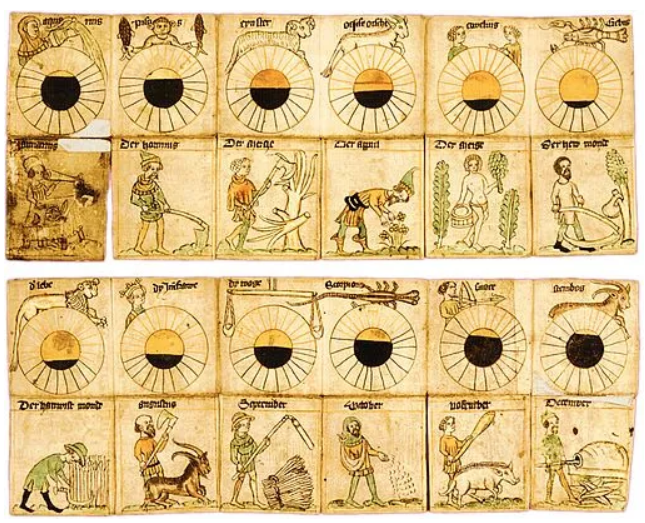
Image from the Oxford Astrologer
Essentially, the zodiac sign in which the moon resides is considered barren or fertile. Water and earth signs are generally considered fertile while fire and air signs are considered barren. Libra, Sagittarius and Capricorn however are considered semi-fertile. Cancer is said to be the most fertile. It is also interesting to note that people work with the barren and fertile model when trying to plan the ideal time for conceiving a child. Land and body are eternally connected.
In terms of gardening, barren days are best for harvesting, pruning and weeding. Fertile days of course are best for planting as well as fertilizing. There are also a few side notes that suggest weeding should be done in the sign of Leo, pruning should be done within a fire sign, root crops should be planted in Capricorn, and above ground crops should be planted in Cancer. Of course these are simply suggestions and experimenting with your own practice and seeing what works best for you and your garden is always the best system.
You can then incorporate the barren and fertile model with the lunar phases to further enhance the vitality of your garden. Or you don’t have to. Use one, or the other, or none. This practice is meant to make gardening more joyful, intentional and abundant. Simply do what feels right. Of course modern life is wild and we don’t always have time to figure out what day is best for which activity. We created the LUNICA Planner just for that reason. It gives a basic refresher of moon gardening but also lists exactly what task is ideal for what day in accordance with the lunar phases and zodiac so you can simply get to work.
When it comes down to it, we are in uncertain times. The world feels like it is changing at an unprecedented rate, but there is still beauty and life out there. There is still a reason to celebrate and connect with all that is around us, both in the sky and under our feet. Moon gardening brings us back to where we began. It helps us work with the rhythms of the earth rather than against. And in the days when droughts are becoming more frequent, storms more violent, food sources less reliable, shouldn’t we want to harness every resource we have with as little force?

Plants and Planets with Sarah Corbett
I am honored to share some of the wisdom of clinical herbalist, non-diet nutritional therapy practitioner, and traditional astrologer, Sarah Corbett. She is the founder of Rowan + Sage, where she shares handcrafted astrologically-aligned herbal products, works with clients in her clinical practice, and guides others on their plant path through educational programs and mentorship. Sarah’s work weaves together the old ways with the new to create powerful, evidence-based offerings that bring forth ancestral herbal wisdom with a touch of magic and mysticism.
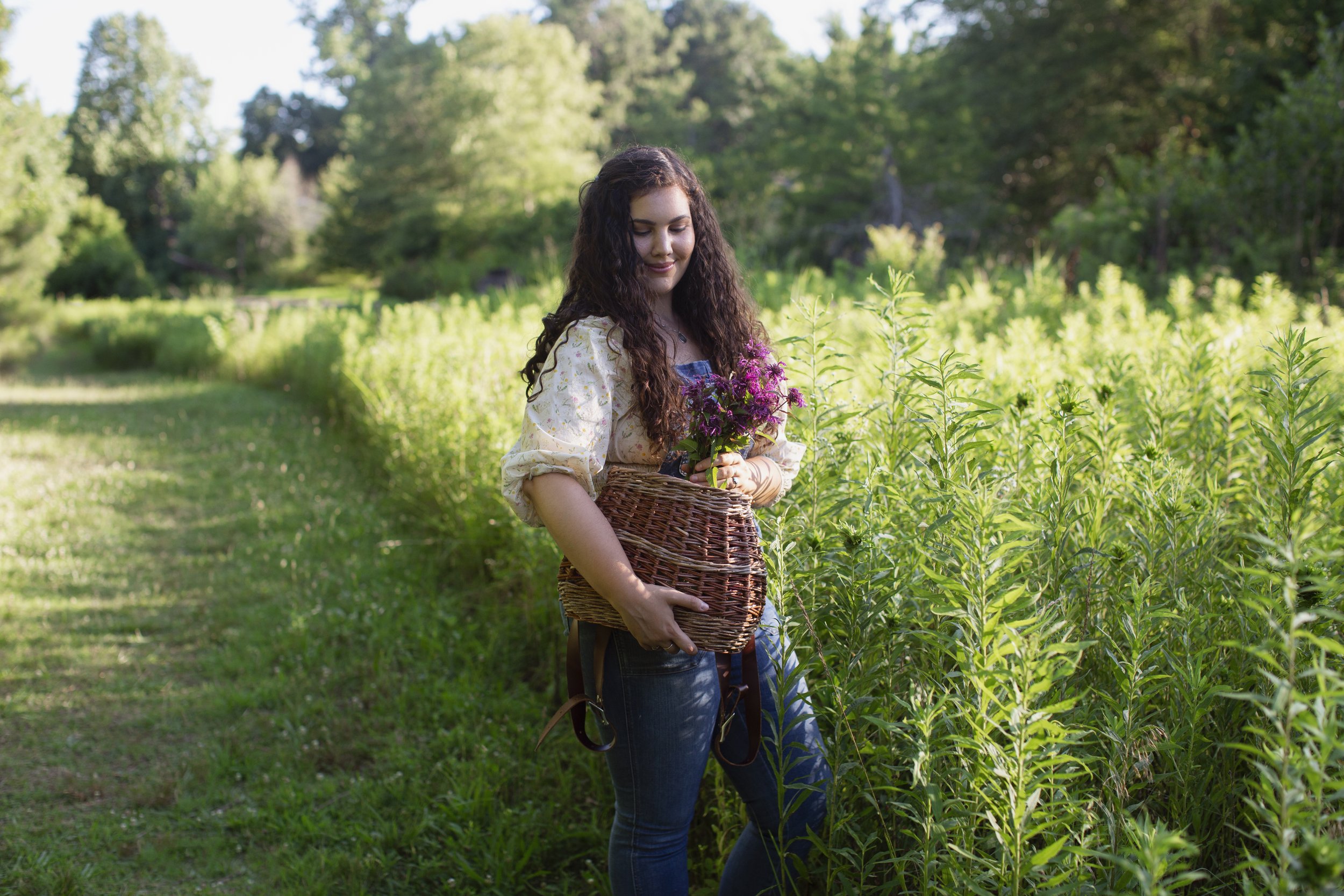
I wanted to know more about the cosmic-plant connection and she so generously shared a bit of her knowledge with me. Enjoy!
Who are your ancestors and on what land do you live?
I am a first-generation Bukharian-American; my mother’s family emigrated to the United States as refugees from the former USSR, though we are from Uzbekistan and the surrounding lands of Central & West Asia. My father is a settler and his family has been in the southeast United States for 400 years, migrating from Scotland over the centuries. I grew up on the lands of the Muscogee and Cherokee, and currently live on Muscogee land in so-called Atlanta, GA.
Can you describe what the core philosophy and principles of astro herbology are?
I must first preface this by sharing that I teach a relational approach to astroherbalism, which informs how I define it. Relational astroherbalism is the practice of engaging with the inherent connections that exist between the earthly and the celestial. The basic premise of astroherbalism is that planets have a unidirectional relationship with plants – plants are expressions of the nature and virtues of the planets. Plants help us to access the virtues of planets in an embodied way, as we can see them, touch them, grow them, and imbibe them in the here and now. Instead of contemplating the sphere of Venus and imagining what Venus describes based on ancient texts and astrological delineations, one can learn about what it means to be Venusian from yarrow or rose directly. Thorns teach us about Mars, nutritive oats of the Moon, and so on and so forth. Relational astroherbalism facilitates an embodied approach to both plants and planets while helping us to form relationships with both.
How is practicing herbalism in accordance with the cosmos linked to your own culture and ancestry?
While astroherbalism is not a practice with a clear linear history, it has thrived in Central, West, & South Asia, North Africa, and the Mediterranean since it first began in Mesopotamia. Some of the first textual evidence we have describing people's observations of the influence of heavenly bodies on plants and other forms of medicine comes from Babylon in the first half of the second millennium BCE, though astrological medicine was likely already known in this region before this time. Astrology grew from the agricultural cycle of Mesopotamia – it is a land-based, relational calendar that bridges earth & sky.
People often see astrology as this new age typology that is limited to a personality-type analysis. But to the peoples of the SWANA (Southwest Asia & North Africa) region, it was a system embedded into ritual life, medicine, agriculture, and other sciences. We would not have the astrology we have today without the innovations that began in Mesopotamia and continued to develop throughout Persia and the Islamicate world long before it was ever brought west to Europe. Many astrologers in these regions were also physicians and herbalists – some of the most famous of them are from the same cities and provinces as my family! Approaching astrology in a relational way and including plants in that practice has always been a part of my people’s worldview and legacy.
Can you give an example or two of an herb and their associated planet? How can you tell this herb is associated with that planet and how does it inform how you work with that particular herb?
Identifying the planetary rulers of plants is a complicated and in-depth process that requires assessing the plant from a holistic perspective. Some of the things we consider when exploring planetary rulership include the plant’s energetics, tastes, actions, tissue state & organ system affinity, colors, morphology, healing virtues, habitat, and historical/cultural perspectives.
It’s not as simple as saying that roses are connected to love, love is connected to Venus, so rose is an herb of Venus. Rose is an herb of Venus and we can see its ability to fortify the emotional heart while connecting us to pleasure as part of its Venusian quality, but its flowers also share visual characteristics of Venus in its coloring, it prefers to grow in Venusian environments, the primary quality of rose is relaxing & astringent, it is sweet and astringent in taste, and its herbal actions fall under Venus’ purview.
Another example is nettle, which is an herb of Mars. Martial plants impact vitality, improve physical body awareness, stimulate the immune response, and have an affinity for the immune, endocrine, musculoskeletal, and circulatory systems. They tend to have serrated or jagged leaf edges; sharp thorns or pointedness, or in the case of nettle, stinging hairs; they are tenacious and take over the areas they grow in; can be salty and mineral-rich; and may be stimulating, rubefacient, alterative, nutritive, and circulatory stimulant in action. These are all qualities we can see clearly in nettle.
Understanding the planetary rulers of plants helps me to see the plants through more complex and clear language. When I’m having a particular experience and wish to call on an herb for aid, I can ask myself which planetary virtue may be most healing at this time. Do I need the sharp, protective quality of Martial nettle? How will that feel in the long term? We as herbalists know that nettle can be irritating and drying after long-term use without the addition of other herbs to balance its energetics – surely we can only hang out with the warrior for so long before we wish to find more soothing support. There’s much more to all of this, but I hope this helps you begin to see what’s possible when we work with plants in this way.
Do you observe any relation between the plants and planets with the zodiac in your practice?
A common misconception in astrology is that zodiac signs rule things or experiences – this responsibility is exclusive to planets. Zodiac signs describe areas of life, or from a physical astrology perspective, various parts of the body. For example, there are two signs ruled by Mars: Aries & Scorpio. Aries describes the head, eyes, upper jaw, our febrile mechanism, blood, and iron. Scorpio governs the lower digestive system, specifically the colon and rectum, as well as reproductive organs like the prostate, the pelvis, our sweat glands, and aspects of the endocrine system that are innervated with reproductive health. Nettle is a plant that tends to mirror these Martial plants in its growing cycle. The restorative, blood-building leaves are ready to harvest in springtime Aries season, and the roots (which are often used for prostate health) are ready to dig in Scorpio season come autumn. This is one very poignant example of how we can see astrological cycles and planetary qualities at work here on Earth. I’m constantly in awe of the plant-planet connections I witness throughout the zodiacal year, and these observations are the core of my work inside of our program Seasonal Herbcraft, where we get to know the plants through the lens of the zodiac and planetary rulership.
Besides your wealth of knowledge, what sources of inspiration do you draw from when creating herbal formulas?
I love to create simple herbal formulas! I usually base my formula on an herb pair or triplet that’s focused on supporting the concern at hand combined with a driver that helps to bring those herbs to the organ system in need of aid and a corrigant to improve the taste or harmonize the energetics of the formula to be more specific for the person I’m working with. My formulas usually include between 3-7 herbs in total, though I’ll sometimes add more to things like cordials and syrups. I’m very inspired by Unani Tibb and Persian traditional medicine formulation strategies, as well as simple kitchen wisdom passed on by my grandparents. When I’m working with someone directly through an astroherbal lens, I may also work with astrology as a way of narrowing down the final herbs I select for them. We’ve all had the experience as herbalists of talking with someone about their health experience and notating several herbs that come to mind in the margin of our notes. I’m always working to find the most specifically indicated plant for someone so that they can really build a relationship with that one herb, and astrology can help me whittle my long list of ideas down to a more specific formula for them. I must note that astroherbalism isn’t a replacement for solid clinical skills – it is more of a secondary lens that can help us refine our strategy.
Do you have any simple rituals or tips for folks to start living and working with herbs more in rhythm with the cosmos?
Begin cultivating an awareness of the seasons and how plants shift in alignment with them. Then layer in the cycles of the two most tangible “planets” in the cosmos for us here on earth: the luminaries, our Sun and Moon. While not planets in an astronomical sense, these celestial lights have reliable cycles that are easy to observe each day and night. The Sun’s cycle demarcates our seasons and of course, has a direct relationship with the life cycles of plants here on Earth. The Moon moves quicker than the Sun and can give us more day-to-day information, especially about our experience of being in a body and how to support our needs.
When I first started my embodied astrology practice, these were the only planets that I worked with. I kept journals for years where I notated which plant was blooming now and what was happening astrologically that day, or how I was feeling and what herbs helped along with notes on what sign the Moon was in, etc. These journals helped me create a living personal almanac of the land around me and how I experience living with this land. The ritual is to spend time with the plants, every day, to quiet your mind and connect with them on their level. Plants are just as alive and filled with personality as humans are – but they communicate differently than we do. Slowing down to the pace of plants and opening our hearts and minds to hear their stories is an ongoing practice of expanding our senses. It may not come naturally to folks when they first try it, but get out on the land every day and see what begins to grow within you in time.

Which herbs are you feeling called to work with right now?
Now that the seasons are turning to autumn, I’m walking the field of goldenrod and aster daily, waiting to see their beautiful blooms. Goldenrod is always a favorite for me at this time of the year, and it’s also the first plant that taught me astroherbalism. Many years ago, I was in a field of goldenrod and had a wave of knowing come over me – this was an herb of Venus. I didn’t know why, or how, but I knew this was true. After that experience, I began to dive deeper into astroherbalism so that I could understand why it was an herb of Venus, which helped me to develop the system I teach to my students now, ten years later.
You are also an advocate for decolonizing herbalism, are there any messages you have for folks to help them be more aware of how they work with, respect and enjoy the natural world and the people who are interwoven within it?
Oh yes, of course. First, really identify what your values are around this and then try to connect with teachers and colleagues who share those values. We don’t want to put ourselves in an echo chamber, but it is hard to learn herbalism from someone who isn’t invested in decolonizing this practice if that’s a core value you hold. Especially considering how much oppression and violence is wrapped up in the effects of colonization. So much of “western herbalism” is built on theft and cultural erasure, and unless someone is openly naming that and working to deconstruct it, it’s likely that you as a student will either learn to uphold and perpetuate that violence or will be harmed directly. I don’t wish that on any student of the plants.
I would also encourage folks to try to learn from lots of different teachers who come from different backgrounds and cultural perspectives. Our global herbal heritage is vast – there is no one way to practice herbalism. Learning from many teachers helps to deepen our own understanding of how humans have always built relationships with plants, expands our ability to hold many different truths about how to work with plants, increases our capacity to cultivate relationships with other human teachers, and directly combats the tendency to put teachers on pedestals. There are a handful of teachers who are essentially worshipped in a cult-like way in our field. It’s dangerous to link our entire concept of herbalism to one specific teacher, and if your teacher is discouraging you from learning from others, that’s a red flag.
We can also decolonize our herbalism by learning directly from people who are connected to their lineages. For example, instead of reading a book written by a white settler about a particular Indigenous tribe's use of herbs, as the writing will ultimately be filtered through the lens of their whiteness, what if you instead built a relationship with those Indigenous people and learned directly from them? Approach people with humility too – many groups have practices and teachings that are closed to outsiders. We are not entitled to know everything and we should be mindful not to approach people with an extractive mindset. But ultimately, decolonizing herbalism isn't just about learning accurate history or connecting to our ancestral herbal relationships – that's a part of it. Decolonizing herbalism requires us to material divest from oppressive systems and support the people who are most affected by colonization and white supremacy.
Are there any exciting projects you’re working on right now? Where can people find you to support you and your work?
Oh always working on finding time to write a book on astroherbalism, which I have no definitive date for! But I also have some really beautiful online programs that are self-paced and open enrollment, and I invite folks to check those out:
Herbaria Membership Program – Our community-driven monthly herbal membership and digital library for accessible & expansive education on the virtues of plants. https://www.rowanandsage.com/herbaria
Vitalist Herbcraft – This foundational class introduces folks to the key aspects of herbalism that every plant person needs to know to move forward on their herbal journey. https://www.rowanandsage.com/vitalistherbcraft
Seasonal Herbcraft – A year-long exploration of relational astroherbalism through the elements, zodiacal wheel, and seasons of the year. https://www.rowanandsage.com/seasonalherbcraft
Kitchen Herbcraft – A self-paced online program that teaches you how to make simple, effective, and incredibly potent herbal preparations at home. https://www.rowanandsage.com/seasonalherbcraft
We also host culturally & bioregionally-rooted teachers for guest workshops each month – you can check out our upcoming events and access past replays here: https://www.rowanandsage.com/upcoming-events
Connect with Sarah and learn more about her work via her website www.rowanandsage.com or on all social media channels @rowanandsage.


How to Open the Heart Chakra with Herbs and Ritual { With Veladya Chapman }
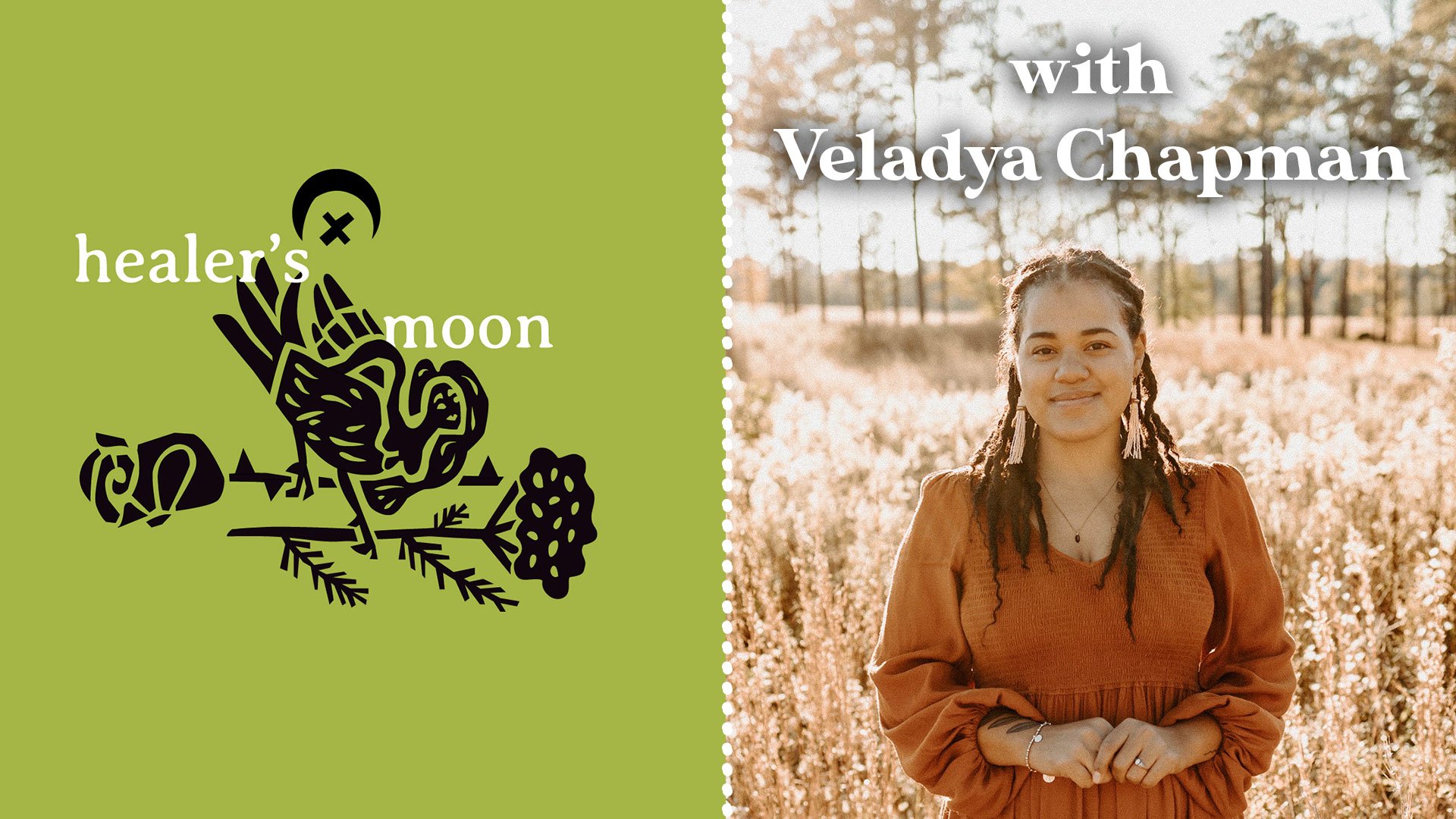
Veladya Chapman is a mother, herbalist, holistic nutritionist and performer with a passion for women's health and ancestral living. She resides in Georgia, where she grows her own food and herbal medicine.
In this episode we’ll discuss:
the journey of finding your place in the world
yoni steaming and eggs
nourishing the female reproductive system
embracing and enjoying your menstrual cycle
herbs for the heart chakra
rituals to unblock a weary heart chakra
finding balance postpartum

How to Live a Simple Life in Connection With the Land { With Cat Seixas }

Cat Seixas is a Land steward, mother, knitter, folk herbalist and writer, living in the hills of central Portugal, her native land, with her partner and daughter. Over the last 6 and a half years, she and her partner have built their own house by hand and grown a garden. They value what's local and in season and believe in the strength of community and trade. To her these represent acts of resistance and social empowerment - they may be small steps towards a better world, but make a difference at our local level. Cat has been a contributor to publications such as Flow, Pom Pom Mag, Making Stories, Ginza Mag, Plants are Magic, among others.
You can find her new book The Wild Remedy: Mindful, Nature-Inspired Projects for You and Your Home here: https://smarturl.it/thewildcraft
In this episode we’ll discuss:
the complexities of ancestry and family relationships
grandmother medicine
how to instill old traditions into modern life
fascinating medicinal plants and trees such as the olive tree and oak
community sufficiency vs self sufficiency
how Cat and her family built their own house and live off the land
the best skills to learn to live a more simple and sustainable life

How to Make Magic from Chaos
The fist official episode of the Healer’s Moon podcast discusses how we can build strong foundations as healers within us and around us so that we may wield our healing skills to our full potential. If you’re feeling ungrounded, lost, disconnected, chaotic, this episode is for you.
We’ll discuss:
where magic exists in the world
the difference between magic and chaos
identifying and healing traumas of the root chakra
cultivating a safe and expansive environment around us
grounding ideas to connect to the body and land

How to Celebrate the Winter Solstice {& a Guided Meditation}

In this special bonus episode of the Healer’s Moon podcast, we will explore how to make the Winter Solstice more magical. So often we’re presented with these cookie cutter rituals to perform based on modern Wiccan or European traditions while ignoring all of the truly colorful and diverse stories and traditions of the rest of the world. If you’re looking for a deeper way to connect to this magical time of year, take a listen.
We’ll discuss:
a brand new offering, the Winter Medicine Portal
the problem with modern Solstice celebrations
the common thread between all cultures when it comes to the Solstice
how to celebrate the Winter Solstice in an authentic way
my personal favorite rituals for the Solstice
a guided meditation to deepen our connection to the Winter Solstice
Some favorite moments of the season:

The History and Legacy of the Great Lakes Anishinaabeg with Nathan Wright

Nathan Wright joins us in our discussion on healing grounds. Nathan is an herbalist, activist, business owner, water protector and member of the Sault Tribe of Chippewa Indians in Michigan. He generously shares with us his perspective on our land-based journey. Listen until the end for a special discount to Nathan’s online business Herbal Lodge.
We’ll discuss:
the history of the indigenous people of the Great Lakes
indigenous stories of the land
how to connect with the land
how to be a good ally
the unsung fight against Line 5
Nathan’s water protector group MackinawOde

Medicinal Magic of Burdock the Fire Stoker

As we continue our discussion about building a strong foundation, we dive into the medicinal magic of burdock. We will discover how burdock helps to move root chakra energy, heal the gut, balance the body and give us energy to make the changes we long to make in life. It truly is a master of movement as it stokes our internal fires.
We’ll discuss:
where burdock grows
how to harvest burdock
the energetic and scientific medicinal qualities of burdock
how to make burdock into a tincture, glycerite, and overnight infusion
the worldwide lore surrounding burdock